
Technology moves fast. The computers, monitors, printers, and networking equipment your business relies on today may be outdated sooner than you think. Whether you’re upgrading for better performance, improved security, or compatibility with the latest software, a technology refresh is a normal part of doing business.
What many companies don’t plan for is what happens after the new equipment arrives.
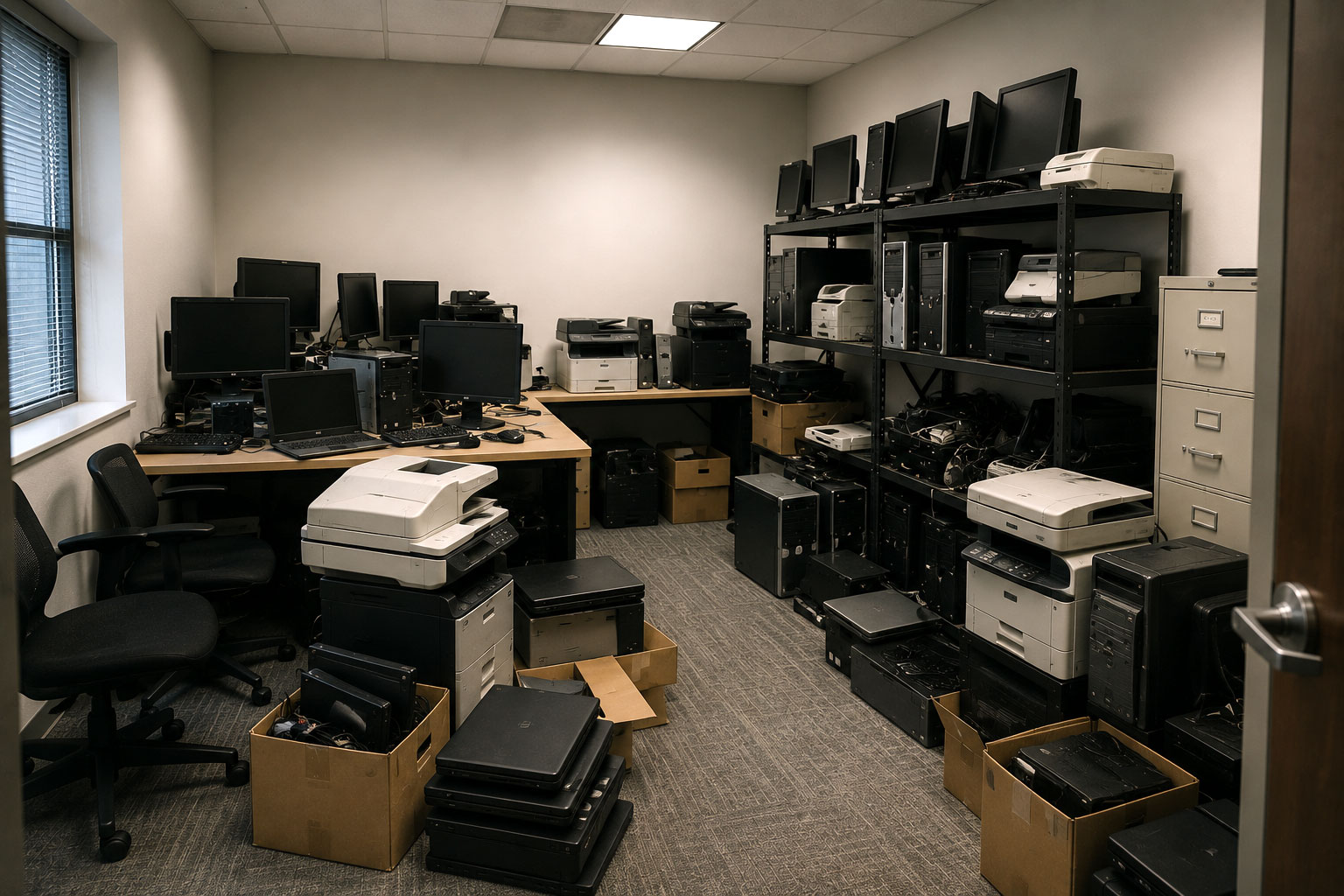
Old laptops get stacked in a storage room. Retired desktop computers are tucked under desks. Servers are disconnected but never removed. Before long, outdated electronics begin taking up valuable space while creating unnecessary security risks and clutter.
If your organization is planning a technology upgrade, now is the perfect time to think about your electronics recycling strategy as well.
Why Businesses Upgrade Their Technology
Technology refreshes happen for many reasons. Aging computers become slower, operating systems reach the end of support, and newer software demands more processing power than older hardware can provide.
Many businesses are currently replacing computers to meet the requirements of Windows 11, improve cybersecurity, support remote employees, or take advantage of the latest AI-powered productivity tools.
Replacing aging equipment helps employees work more efficiently while reducing downtime caused by outdated hardware.
Don’t Let Old Equipment Become Tomorrow’s Problem
When new equipment arrives, the old devices often become an afterthought.
Instead of being recycled promptly, retired electronics are moved into storage with the intention of dealing with them later. Unfortunately, “later” often turns into months or even years.
Over time, storage rooms become filled with outdated desktop computers, monitors, printers, servers, phones, networking equipment, cables, and other electronics that no longer serve a purpose.
Protect Sensitive Business Information
One of the biggest mistakes businesses make during a technology refresh is focusing on installing new equipment without thinking about the data stored on the old devices.
Even computers that have been reset or reformatted may still contain recoverable information.
Old hard drives can store customer records, employee information, financial documents, emails, passwords, tax information, and other confidential business data.
Secure hard drive destruction helps ensure that sensitive information cannot be recovered after equipment leaves your facility.
For businesses in healthcare, finance, legal services, education, and other industries that handle confidential information, protecting that data should always be part of the upgrade process.
Recycling Supports Your Sustainability Goals
Modern businesses are placing greater emphasis on environmental responsibility.
Responsible electronics recycling helps recover valuable materials including metals, plastics, and other components that can be reused in future manufacturing instead of being sent to landfills.
If your organization has sustainability initiatives or ESG goals, recycling retired electronics is an easy way to reduce waste while demonstrating responsible business practices.
Make Your Technology Refresh More Efficient
Planning your electronics recycling at the same time as your equipment upgrade makes the entire process easier.
Instead of allowing obsolete equipment to pile up, schedule a pickup shortly after your new technology is installed. Your office stays organized, valuable storage space remains available, and sensitive equipment leaves your facility promptly.
This approach also saves employees from spending valuable time figuring out what to do with retired electronics weeks or months later.
We Come to You
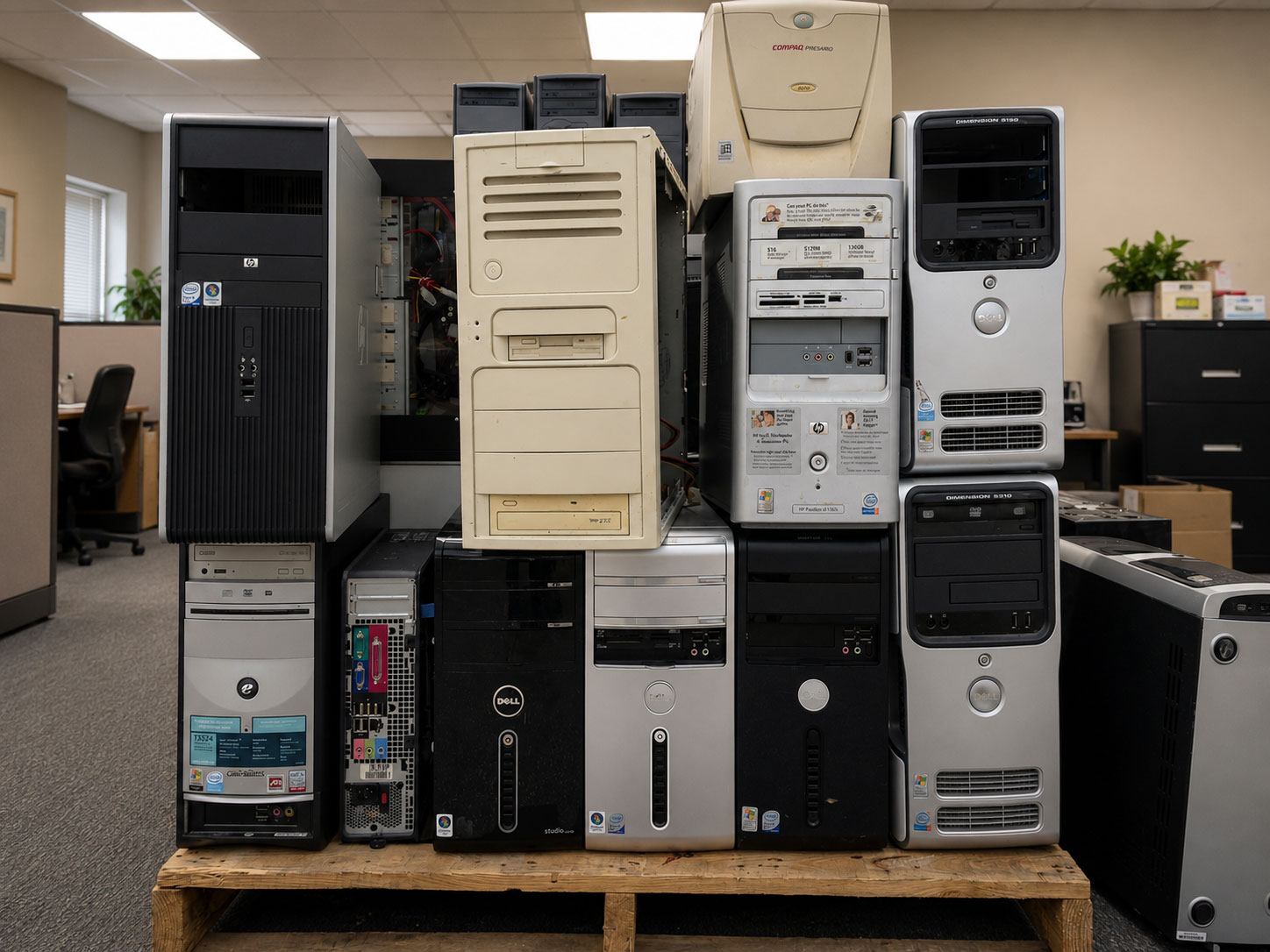
One reason businesses delay electronics recycling is the assumption that transporting dozens of computers and monitors will be difficult.
Responsible Recycling Services makes the process simple by coming directly to your office, warehouse, medical facility, school, or commercial property.
If your organization also needs secure hard drive destruction or document shredding, those services can often be coordinated during the same visit for added convenience.
Upgrade with Confidence
A successful technology refresh doesn’t end when the new computers are installed. It ends when the old equipment has been removed safely, securely, and responsibly.
Whether you’re replacing a handful of workstations or upgrading an entire office, Responsible Recycling Services can help simplify the process with convenient pickup and responsible electronics recycling.
The next time your business invests in new technology, make sure your plan includes clearing out the old equipment too. Your office will be cleaner, your data will be better protected, and your team can focus on getting the most from your new technology.
Frequently Asked Questions
When should businesses recycle old computers during an upgrade?
The best time is immediately after new equipment has been installed and all necessary data has been transferred. This prevents old electronics from accumulating in storage.
Can old computers still contain sensitive information?
Yes. Deleted files and reformatted drives may still contain recoverable data. Secure hard drive destruction provides an added layer of protection for confidential business information.
What electronics can be recycled after a technology refresh?
Most businesses can recycle desktop computers, laptops, monitors, printers, servers, networking equipment, phones, scanners, docking stations, keyboards, mice, cables, and many other electronic devices.
Do you provide pickup for businesses?
Yes. Responsible Recycling Services provides convenient pickup from businesses, offices, warehouses, schools, healthcare facilities, and commercial properties, making electronics recycling simple and efficient.